Ask Before the Flipchart: A Resident's Question Bank for Heathrow Drop-Ins
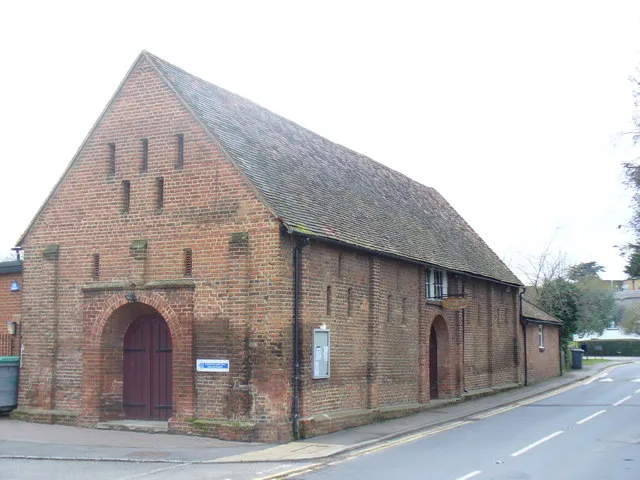
Photo: Colin Smith, CC BY-SA 2.0, via Wikimedia Commons
The village hall is not a courtroom. There is no judge, no oath and usually no microphone. But it is still a place where commitments are made. A consultant says the assessment will be updated. A promoter says residents will be consulted again. A council officer says the issue is noted. If nobody writes it down, the conversation evaporates. This question bank is designed to stop that.
How to use the bank
Take a notebook. Ask one question at a time. Ask for the document reference, the date and the name of the person answering. If the answer is verbal, repeat it back and ask whether it can be confirmed in writing. Do not try to win the room. Try to leave with a record. The twelve questions below are grouped by theme, but you can use them in any order.
Baseline and forecasts
1. Which version of the demand forecast underpins this consultation, and when was it signed off?
Why it matters: forecasts change. An assessment built on an old forecast can understate or overstate the case. Ask for the document title, the date and the sensitivity range. If the answer is that the forecast is commercial, ask how residents are supposed to test the case.
2. What is the agreed baseline for night noise in our ward, measured where and over which nights?
Why it matters: without a baseline, no one can prove an increase. Ask for raw monitoring data, not only contour maps. Ask whether the baseline includes construction noise and surface access traffic.
3. How many homes and care settings in our postcode are inside the 54 dB and 57 dB contours under the consulted scheme, and how does that compare with the pre-expansion baseline?
Why it matters: aggregate figures hide streets. Ask for a postcode-level table and the date it was produced. Ask whether the count includes sheltered housing and supported living.
Mitigation and eligibility
4. Which properties are eligible for noise insulation, and what is the expected wait from application to installation in months?
Why it matters: eligibility is not the same as delivery. Ask for the eligibility matrix, the funding line and the number of households expected to qualify. Ask what happens if a household is refused.
5. What assumptions about staff recruitment for care homes and schools are in the social infrastructure assessment?
Why it matters: care and education depend on workers who can afford to live nearby. Ask for vacancy rates, retention assumptions and the date of consultation with providers.
6. How will respite provision be funded during construction, and which body holds the budget?
Why it matters: family carers are often invisible in expansion assessments. Ask for the section 106 or development consent order schedule that names the obligation and the delivery body.
Surface access and enforcement
7. Which surface access projects are assumed to be complete before first flight, and what happens if they are not?
Why it matters: expansion cases often rely on rail and road schemes that may slip. Ask for the trigger points and the enforcement clause. Ask who decides whether a trigger has been met.
8. What is the complaint and enforcement route if noise or traffic limits are breached, and what penalties apply?
Why it matters: a limit without a sanction is a suggestion. Ask for the monitoring protocol, the escalation path and the published penalty schedule. Ask how residents can see the monitoring data.
9. What is the evacuation plan for care settings and sheltered housing within the emergency planning zone, and when was it last tested?
Why it matters: older and disabled residents need more than a leaflet. Ask for the exercise report and the date it was considered by the local resilience forum.
Environment and carbon
10. What is the carbon budget for enabling works, and how is it separated from operational emissions?
Why it matters: construction carbon can be spent before a single plane flies. Ask for the table numbers and the assumptions about materials, haulage and waste. Ask whether the budget is a ceiling or an estimate.
11. Which green belt or biodiversity sites would be lost, and what is the compensation ratio in hectares?
Why it matters: a ratio is not a replacement. Ask for the metric, the location of lost sites and the location of proposed compensation. Ask whether the compensation land is already protected.
Record and follow-up
12. How will answers from tonight be recorded, published and responded to, and by what date?
Why it matters: this is the question that turns a drop-in into accountability. Ask for a commitment reference. Ask where the response will be published. Ask who owns the action.
Turning answers into a record
After the event, write up your notes the same day. Separate what you were told from what you inferred. Send a short email to the consultation team summarising the answers and asking for corrections. Copy your local councillor and residents' group. If you asked for a document and did not receive it, follow up with a freedom of information or environmental information request. If you were told something would be published, diarise the date.
A question bank is not a trick. It is a tool for residents who are tired of being talked at. The flipchart will be packed away. The commitments should not be. Heathrow Pause encourages every household to ask, record and follow up, because a pause is only meaningful if the questions are still on the table when the consultants leave.