Connections, Not Compulsions: Rethinking the Transfer Passenger Case for a Third Runway
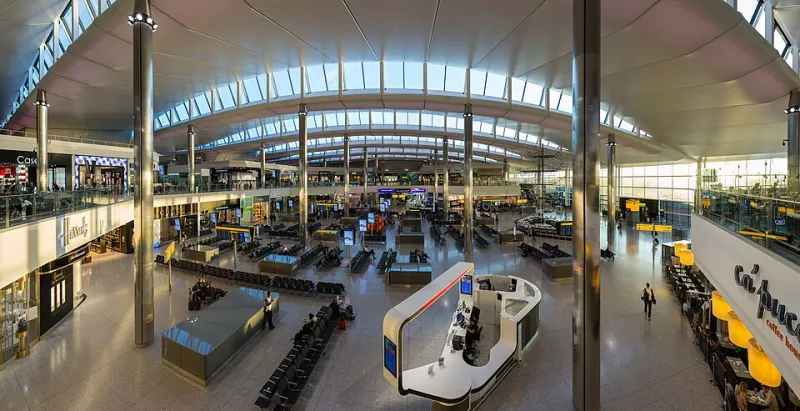
Photo: Diliff, CC BY-SA 3.0, via Wikimedia Commons
Few claims in the Heathrow debate are repeated with less examination than the hub argument. A third runway, we are told, is necessary to keep Britain connected to the world. Without it, transfer passengers will desert Heathrow for Paris, Amsterdam, Frankfurt or Dubai, and the UK will lose its place as a global aviation hub. The claim has become a kind of background music to the expansion lobby: always present, rarely tested.
As of November 2026, it deserves a proper test. Transfer passengers matter to Heathrow’s business model, but they are not a fixed natural quantity that a runway must accommodate. They are the product of airline strategy, alliance scheduling, pricing and Government policy. A pause on expansion should therefore include an independent review of the hub case, rather than treating it as settled fact.
What the hub argument actually claims
The strongest version of the hub argument runs like this: long-haul routes need a critical mass of passengers, and transfer passengers supply that mass. A hub airport allows airlines to aggregate demand from many origins and destinations, making routes viable that would not survive on point-to-point traffic alone. If Heathrow cannot grow, airlines will move their connecting flows elsewhere, and UK travellers will lose direct access to destinations that depend on transfer feed.
That is a serious argument, and it should not be dismissed. But it is often stretched into a much weaker one: that any transfer passenger is inherently valuable, that more transfer capacity is always better, and that a third runway is the only way to secure either. Those are separate claims. The first requires evidence about route economics. The second requires evidence about the UK’s connectivity needs. The third requires evidence that alternative policies cannot deliver the same outcomes.
Transfer passengers are not a monolith
Heathrow’s transfer traffic is varied. It includes alliance passengers connecting between long-haul services, short-haul feeder traffic into London, and travellers using Heathrow as an interchange between destinations that have nothing to do with the UK. In recent years, connecting passengers have represented roughly a quarter of Heathrow’s total traffic, with the share fluctuating as point-to-point demand recovered after the pandemic. That is a significant minority, but it is not the whole airport.
The economic contribution of transfer passengers is also more contested than the hub lobby suggests. Transfer passengers can generate retail spending, but they often pay lower aeronautical charges and are highly sensitive to connection times and ticket prices. They fill seats that might otherwise fly empty, but they can also dilute yield on routes where airlines would rather sell to higher-paying origin-and-destination passengers. The relevant question is not simply how many transfer passengers could be carried. It is which connections the UK actually needs, and who should pay for them.
Airlines choose to hub
Hubs are not built by runways alone. They are built by airlines making strategic choices about where to concentrate their networks. British Airways and its alliance partners have long used Heathrow as a connecting platform, but that model is a commercial strategy, not a public obligation. If new capacity is built, airlines are not compelled to use it for transfer traffic. They may use it for point-to-point routes where yields are stronger, or to defend market share against rivals at other London airports.
This matters for the hub argument because it exposes a missing link. Expansionists often move from more runway capacity to more transfer passengers to greater national connectivity as if each step were automatic. It is not. A runway creates slots. Airlines decide what to do with them. A Government that wants particular connectivity outcomes must say so explicitly, and must explain why a market that has spent decades consolidating at Heathrow would suddenly deliver a different pattern once concrete is poured.
Post-pandemic patterns have changed the picture
The hub case also rests on projections that have not fully absorbed the changes of the 2020s. Leisure travel and visits to friends and relatives recovered strongly in many markets, while business travel has not returned to its previous pattern in every sector. Airlines have restructured networks, retired aircraft and shifted capacity. Video conferencing has changed some corporate travel behaviour, even if it has not eliminated it.
These are not arguments that aviation is finished. They are arguments that the future is less predictable than the expansion lobby’s models suggest. If transfer traffic is central to the case for a third runway, then the assumptions behind that traffic should be published and stress-tested. What happens if transfer shares remain below pre-pandemic levels? What happens if airlines use new capacity differently from the way consultants expect? What happens if regional connectivity is better served by point-to-point routes or rail substitution? A pause is the right moment to ask.
The economics of connecting passengers
The economics of hubbing are real but conditional. Connecting passengers can support frequency and route breadth, and frequency matters to business travellers and exporters. But the hub premium is not a blank cheque. It depends on airport charges, airline costs, slot values and the willingness of passengers to connect through a congested airport with ageing terminals.
Heathrow’s expansion case often treats connectivity as a number to be maximised. A progressive approach would treat it as a set of public priorities to be chosen. Do we need more connections to emerging markets, or more frequent connections to European cities? Do we need transfer passengers who never leave the terminal, or better rail links to the regions? Do we need a third runway, or a reformed slot regime that prioritises routes with clear UK benefits? These are political questions, not technical ones, and they should not be outsourced to an airport’s shareholders.
Why the pause should include a hub review
An independent review of the hub case should be established as part of any pause on Heathrow expansion. It should be appointed transparently, publish its assumptions and model a range of transfer scenarios rather than a single central case. It should examine airline behaviour, alliance strategy and the difference between connectivity and transfer volume. It should compare expansion with alternatives such as slot reform, regional point-to-point growth and rail investment. And it should report before any decision on a third runway is taken.
The burden of proof should sit with those who claim that expansion is necessary. At present, the hub argument functions as a conversation-stopper: a way of making scrutiny seem naive. It is not naive to ask for evidence. It is democratic.
Pause. Rethink. Protect local communities. The hub myth is not an argument for doing nothing. It is an argument for doing the analysis first — and for refusing to let a contested commercial model be presented as an unanswerable law of nature.