Ten Steps to Make 'Pause' Stick: A Community Campaigner's Toolkit
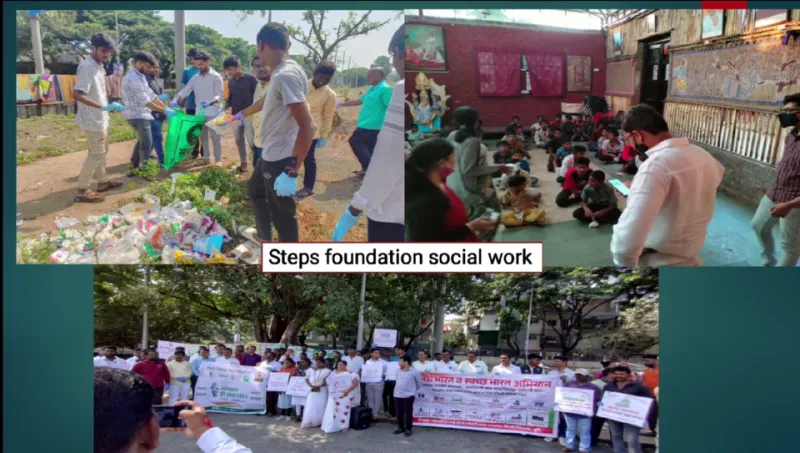
Photo: AbhishekAadeOfficial, CC0, via Wikimedia Commons
Every campaign reaches the point where goodwill is not enough. Residents turn up to a consultation, fill in a form, sign a petition, and then wait to be told that the decision has been taken elsewhere. The purpose of this toolkit is to break that cycle. It sets out ten actions that any group, however small, can take in the coming months to turn a demand for pause and rethink into something that decision-makers have to answer.
It assumes a handful of committed people, a shared drive folder and no budget to speak of. That is enough.
1. Agree the ask before the tactics
Groups fragment when the demand is vague. Spend one meeting writing a single sentence that everyone can sign up to — for example, that no development consent order should be submitted while postcode-level night-noise, air-quality and traffic evidence remains unpublished or unreviewed. Put it at the top of every letter. Tactics then follow from the ask rather than competing with it.
2. Write to your MP, then diarise the follow-up
A single letter is easily filed. A letter plus a follow-up plus a request for a meeting is harder to ignore. Keep it to one page: who you are, how many households you represent, the specific ask, and one local fact. Ask directly whether the MP supports a pause. Write again if there is no substantive reply within three weeks, and copy the response — anonymised if necessary — into your group's newsletter.
3. Put your council on the record
Councils respond to different levers than MPs. Ask your ward councillors to table a question at full council, and ask the scrutiny committee to commission a report on the local health and traffic implications. Local Plan consultations are a legitimate route for submitting evidence about noise and air quality, and the Health and Wellbeing Board should be asked whether the Joint Strategic Needs Assessment captures airport-related exposure at all. Written questions and formal minutes all become part of the public record.
4. File requests that produce usable evidence
The Freedom of Information Act 2000 gives a twenty-working-day deadline for most public authorities. Environmental information — including noise contours, monitoring data and transport modelling — usually falls under the Environmental Information Regulations 2004, which carry a similar timescale and a wider public interest test. Keep requests specific and bounded: ask for the modelling assumptions behind a particular runway scenario, the number of complaints logged by postcode, or the correspondence between a council and the airport operator about mitigation. Where a refusal arrives, ask for an internal review; the Information Commissioner's Office exists for a reason.
5. Build a ward-level evidence pack
Aggregate figures are the friend of a project that cannot defend itself at street level. Take the published contours and overlay them with what you already know: the primary schools, the care homes, the night-shift employers, the streets with single glazing. Add the noise complaint logs, the GP surgery catchments, the bus routes that stop running before the last arrival. Twelve pages is plenty. Send it to every councillor, every MP and every consultation mailbox, and put it online.
6. Run a listening stall, not a signature drive
A stall outside a supermarket on a Saturday will reach people no leaflet ever will. Go with a clipboard and two questions rather than a petition sheet: what do you hear at night, and what would you want decided differently. Record the answers, with permission and without surnames. The result is testimony you can quote, mapped to streets, and it gives you a volunteer list that no online form will match.
7. Map what people actually experience
Invite residents to log awakenings, first and last aircraft, and the weather conditions that make noise worse. A simple shared spreadsheet is sufficient. Even a few dozen households over a month produces a picture that no annual average can replicate, and it is evidence a councillor can read in a single sitting.
8. Bring in health and education voices
A campaign led only by aggrieved residents is easy to characterise as a local objection. A campaign that includes a GP, a headteacher, a respiratory nurse and a trade union branch speaking about night workers is much harder to dismiss. Approach them early, offer to draft the material, and let them speak in their own words. Their professional standing carries weight that no petition can.
9. Join up with neighbouring groups
The flight paths do not stop at a borough boundary, and neither should the campaign. Groups in Hounslow, Slough, Windsor, Richmond and beyond will be facing the same consultation deadlines with the same modelling gaps. A shared calendar, a shared evidence library and a joint letter from a dozen organisations is worth more than a dozen separate letters, and it protects smaller groups from being isolated.
10. Publish, repeat and set a date
Put everything online: the letter, the reply, the request, the refusal, the evidence pack, the testimony. Then set a public date — a meeting, a deputation, a submission deadline — and tell people what will happen on the day. Campaigns that are visible and predictable are treated as part of the local landscape rather than as a nuisance to be managed until the decision passes.
Two things to avoid
Do not wait for a perfect case before making an ordinary one. Delay is the most effective tool available to a project that wants consent granted quietly. And do not let the group's energy be absorbed entirely by consultation exercises that carry no obligation to change anything. Engage with them, by all means, but file your own evidence alongside.
What pause actually means
None of these steps is dramatic on its own. Together they do something specific: they shift the burden of proof. A pause is not a demand for permanent refusal, and it is not a slogan on a banner. It is a procedural demand, made in writing, that the evidence be published, reviewed and tested before consent is granted.
That demand is reasonable. It is also achievable — by a group of neighbours with a laptop, a meeting room and a deadline. Start with step one this week, and put the date in the diary.