The Numbers That Never Landed: Auditing Twenty Years of Heathrow Demand Forecasts
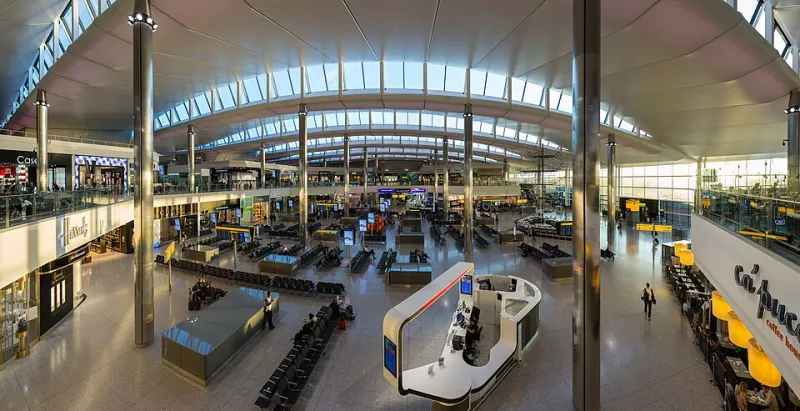
Photo: Wikideas1, CC0, via Wikimedia Commons
A forecast is an argument in disguise
Every case for Heathrow expansion eventually rests on a number. More passengers, more freight, more connectivity, more growth. The number arrives in a spreadsheet, is summarised in a consultation document, and is then treated as though it were a weather report: technical, neutral and beyond argument.
It is not. A passenger forecast is a collection of assumptions about the future dressed up as a projection. It embeds choices about economic growth, ticket prices, airline behaviour, competition from other airports, transfer passengers and carbon policy. Those choices can be right or wrong, optimistic or cautious. They are arguments. And if the whole expansion case is built on them, they deserve the same scrutiny as the flight paths.
The promise of inevitability
The rhetorical power of a forecast lies in its ability to make the future sound already decided. Demand is described as ‘unconstrained’, as if passengers are queuing at the boundary fence and only a runway stands between them and the aircraft. Capacity is described as ‘full’, as if the airport were a cup rather than a market. The mid-point projection is presented as the central truth, with the range tucked away in an annex.
This is not a neutral way to plan. It converts a conditional statement — if the economy grows like this, if fares fall like that, if transfer traffic holds up — into a claim of inevitability. Once inevitability is established, opposition is reframed as denial of reality rather than a disagreement about evidence.
What the record shows
The past two decades offer a useful correction. The 2003 Air Transport White Paper set out a long-term vision of airport expansion. The Airports Commission reported in 2015. The government consulted on a new national policy statement in 2018. Each stage produced forecasts of rising demand and a capacity crunch that was said to be imminent. Each stage treated the need case as broadly settled.
Yet the actual path of passenger numbers has been less obedient. The financial crisis, changing airline strategies, the growth of competing hubs, the pandemic and the uneven recovery in business travel all intervened. Some forecasts were revised; others quietly slipped out of view. The point is not that every forecast was dishonest. It is that forecasts have repeatedly been treated as more certain than they deserved, and the errors have generally run in one direction: towards expansion.
Brexit, the pandemic and the changing shape of European aviation are not mere footnotes. They are exactly the kind of structural shocks that a robust forecast should stress-test. If a model cannot survive contact with reality, it should not be used to justify concrete.
How the models actually work
Most airport demand models start with a base year and project forward using assumptions about GDP, population, income, fares, oil prices, airline networks and competition. They may distinguish between origin-and-destination passengers and transfer passengers. They may model ‘unconstrained’ demand first, then apply a capacity constraint to see what the airport could handle.
That structure is reasonable in principle. The politics lies in the inputs. A slightly higher growth rate, a more optimistic view of transfer traffic, a lower price elasticity or a favourable assumption about airline consolidation can produce a very different answer. So can the choice of base year. A forecast produced before the pandemic and a forecast produced after it are not measuring the same world.
This is why a single headline number is not enough. Readers need the scenario range, the sensitivity analysis, the treatment of carbon costs and the assumptions about competing airports. A forecast with no published sensitivities is a slogan with a spreadsheet attached.
Why the need case keeps being treated as settled
Part of the answer is institutional. Airports, consultants and government departments share a growth framework. Expansion is presented as a matter of national economic ambition, and forecasts become the technical proof that ambition is realistic. Questions about demand are reframed as questions about whether one supports growth at all.
Part of the answer is presentational. Consultation documents are long, and the forecast methodology is buried. Councils and community groups have limited time and expertise. It is easier to argue about noise contours than to reconstruct a passenger model. The result is an asymmetry: the promoter controls the numbers, and everyone else is left to react to the summary.
That asymmetry is not inevitable. It is a choice about how evidence is published and how scrutiny is resourced.
How to interrogate the next set of numbers
When the next forecast arrives, campaigners and councils should ask for the following, in plain English and in public:
- Back-testing. How did earlier forecasts perform against actual passenger numbers? Publish the reconciliation for 2003, 2015 and 2018, not just the newest projection.
- Independent audit. Who checked the model inputs, and can the reviewer’s report be published in full?
- Scenario range. What are the low, central and high scenarios, and what assumptions drive the difference?
- Passenger versus movements. Are we being asked to plan for more people, more flights, or both? The distinction matters for noise and carbon.
- Transfer share. How much of the growth depends on transfer passengers changing planes at Heathrow rather than starting or ending their journey in the UK?
- Price and income assumptions. What elasticities are being used, and how sensitive is the result to small changes?
- Carbon constraint. Does the forecast assume a carbon price, a sustainable aviation fuel mandate or a demand cap? If so, what happens without it?
- Competition. How are Amsterdam, Paris, Frankfurt, Dublin, Istanbul and the Gulf hubs treated? What ifthey take more of the market than expected?
- Behavioural change. What allowance is made for post-pandemic business travel, remote meetings and rail substitution?
- Alternatives. What demand management, regional airport or rail investment options were tested before expanding Heathrow?
- Plain-English summary. A two-page explanation of the model, the inputs and the uncertainty, written for residents rather than economists.
- A data room. The full model, assumptions and correspondence available to scrutiny, not just a glossy brochure.
Pause means auditing the foundation
A pause on Heathrow expansion is sometimes portrayed as a pause on ambition. In reality, it is a pause on credulity. If the need case is the foundation of the entire argument, then the foundation should be inspected before the building work begins.
The next consultation should arrive with a data room, not a press release. It should publish its back-testing, its sensitivities and its uncertainties. It should invite independent scrutiny rather than treat it as hostility. Until it does, the numbers should be treated as what they are: claims to be tested, not facts to be accepted.
Pause. Rethink. Protect local communities.