A Ledger Without Roots: The Biodiversity Test Heathrow Expansion Still Has to Pass
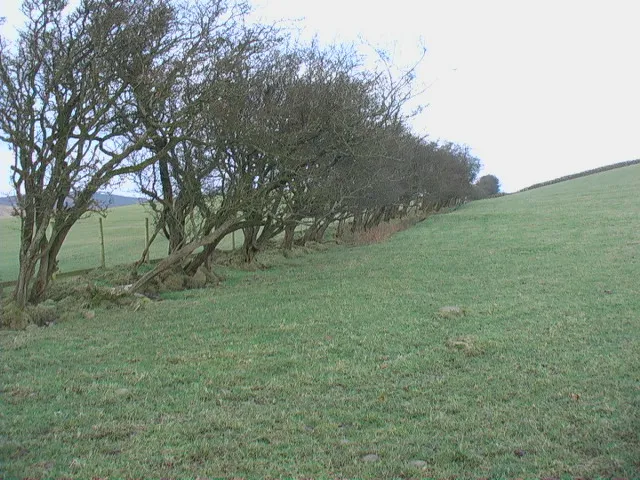
Photo: ian shiell, CC BY-SA 2.0, via Wikimedia Commons
The language of modern infrastructure is increasingly ecological. A third runway would not simply be presented as concrete and tarmac; it would arrive with a biodiversity ledger, a habitat bank, a suite of offsetting commitments and a promise of “net gain”. In 2026, with the statutory biodiversity net gain framework now part of English development practice, that language carries real legal weight. But weight is not the same as truth. For communities around Heathrow, the biodiversity question is not whether a metric can be made to balance. It is whether the things being weighed can be replaced at all.
What “net gain” would actually mean on the ground
Biodiversity net gain works by assigning units to habitats according to their type, condition and distinctiveness. A development that removes or degrades habitat must, in principle, deliver at least a ten per cent uplift, either on site, off site or through a combination of both. The arithmetic is seductive: a loss here, a gain there, a register to prove it. Yet the metric is a tool for comparison, not a description of a living place. It can record that a hedgerow has been lost; it cannot record what the hedgerow did.
A mature hedgerow is not a line on a map. It is a windbreak, a corridor for dormice and bats, a nesting place for yellowhammers, a reservoir of berries and insects, a boundary that shapes the way water moves across a field. Its value lies in continuity and connection. Remove it, and the replacement may take decades to approach the ecological function of what was there before. In some cases it never will. The ledger may show a credit; the landscape shows a wound.
The problem of the irreplaceable
Some habitats are formally recognised as irreplaceable: ancient woodland, veteran trees, blanket bog, limestone pavement and other systems that cannot be recreated within any reasonable human timescale. The planning system is supposed to give them special protection. But much of the countryside around Heathrow is not a nature reserve. It is a working landscape of fields, ditches, hedges, small woods, river corridors and allotments. Its value is cumulative and local. A species-rich verge may not appear in the same legal category as an ancient wood, but to the wildlife that uses it as a stepping stone, it may be just as vital.
This is where the biodiversity ledger becomes a test of honesty. A developer can promise to replace a lost habitat with a new one somewhere else. But if the new habitat is a newly sown meadow in a different catchment, or a cluster of planted trees beside a road, the gain may be real in units and doubtful in ecology. The metric can account for spatial risk; it cannot account for the particularity of place. Residents should ask not simply how many units are being created, but where, when, and for how long.
Where the credits would come from
Off-site biodiversity credits are often generated through habitat banks, land managed for nature improvement over a fixed period. The principle is sensible: development should pay for genuine ecological restoration. The practice demands scrutiny. Is the land already in good condition, so that the “gain” is largely a bookkeeping exercise? Is the management agreement funded for thirty years but no longer? Will the habitat bank be local enough to support the same wildlife corridors that the runway would sever? Is it accessible to the communities who lose green space, or is it a distant compensation plot that residents will never see?
For Heathrow’s neighbours, the localness question is especially acute. The Colne Valley and the green spaces around Harmondsworth, Longford and the surrounding parishes form a connected landscape. Wildlife does not observe borough boundaries. A credit generated miles away may satisfy a national metric while doing nothing for the species and habitats that would be fragmented by a third runway. A net gain that is not a local gain is, from the perspective of the affected community, a net loss with paperwork.
Permanence is not a thirty-year lease
Biodiversity net gain agreements typically require habitat to be secured and managed for a minimum of thirty years. Thirty years is a long time in politics. It is a short time in the life of an oak, a hedgerow or a river corridor. If a third runway is built, its ecological consequences will outlast the management plans, the funding agreements and the officers who signed them. Residents should therefore ask what happens after the statutory period ends. Who owns the land? What covenant protects it? What happens if the habitat bank fails, or the company responsible is wound up, or the management regime quietly lapses?
These are not pedantic questions. They are the difference between a genuine ecological commitment and a temporary landscaping scheme with a legal timetable. A ledger that balances for thirty years and then collapses is not a biodiversity gain. It is a delay in the loss.
An audit for residents
Before any Heathrow expansion is treated as acceptable, the biodiversity ledger should be opened to public scrutiny. That means a clear baseline, established independently, before any works begin. It means a habitat map that records not only the statutory categories but the local connections: hedgerows, ditches, ponds, tree belts and green lanes. It means a spatial multiplier that genuinely favours local compensation, and a register of credits that residents can inspect. It means long-term management and enforcement, with money ring-fenced and responsibilities clear. And it means an honest admission that some losses cannot be offset at all.
The campaign for a pause is not a campaign against nature improvement. It is a demand that improvement be real. A third runway would require London’s airport to confront a landscape that is already under pressure from noise, traffic, air pollution and development. Adding a biodiversity chapter to that story is not enough. The chapter must be tested against the ground it describes.
The test before the tarmac
Heathrow’s neighbours are often asked to weigh economic benefit against environmental cost. The biodiversity ledger is one place where that weighing should be transparent. If the gain is genuine, it should survive being examined. If it depends on credits from distant sites, on habitats that are already protected, on thirty-year promises that no one will enforce, or on the quiet assumption that a planted hedge equals a mature one, then it is not a gain at all. It is an accounting device.
The right response is not cynicism. It is audit. A pause would give residents, councils and independent ecologists the time to ask what the ledger actually contains, and whether the living landscape around Heathrow can be compensated in units, or only protected in place. That question belongs at the centre of any decision about a third runway. The tarmac can wait. The hedgerow cannot.