What the Runway Would Cancel: An Opportunity-Cost Statement for Heathrow’s Neighbours
Every expansion case arrives with a forecast. Passenger numbers rise, cargo tonnage grows, jobs multiply, and the future is drawn as a line climbing steadily to the right. What rarely arrives with it is the other ledger: the public goods that the same capital could buy if it were not spent on concrete, terminals and approach lights. For the communities around Heathrow, that omission is not a technicality. It is the difference between debating a project and debating a choice.
The missing column in the expansion spreadsheet
Opportunity cost is not an exotic economic idea. It is the everyday arithmetic of a household budget. If a family spends its savings on a new extension, it cannot also spend them on a new boiler, a deposit for a child, or repairs to a leaking roof. The extension may be worth it. But an honest case for the extension would not pretend the boiler does not exist.
Expansion promoters are under no legal obligation to publish that kind of statement. They present capital cost as an investment, jobs as a dividend, and community mitigation as a concession. Residents are left to argue about noise contours and compensation schedules while the larger question sits unanswered: what else could this money do?
Heathrow Pause does not oppose growth for its own sake. We oppose growth that is presented as costless because its alternatives have been kept off the page. A pause is not an absence of policy. It is a demand that the missing column be filled in before the first turf is cut.
Four line items residents are told cannot be funded
The point of an opportunity-cost statement is not to invent a fantasy budget. It is to make visible the public goods that are already under strain and for which capital is routinely described as unavailable. Four examples sit close to home.
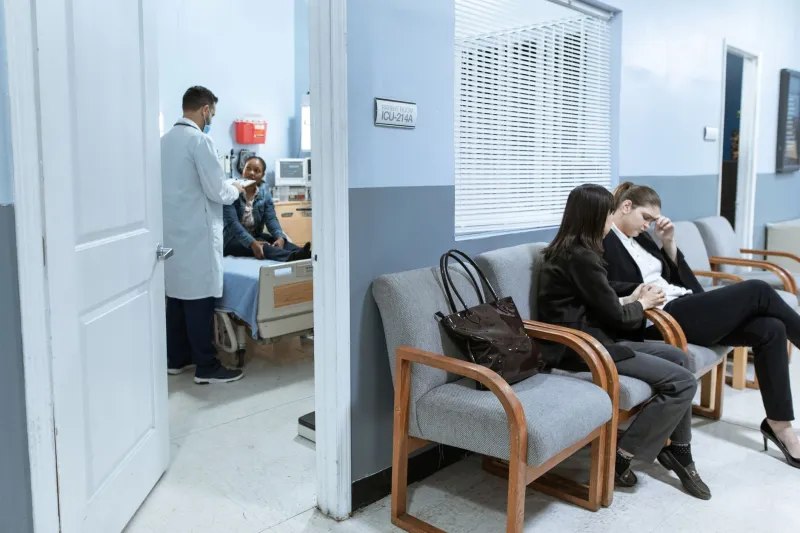
Primary care with no room to breathe
GP surgeries across Hillingdon, Spelthorne and Slough are already managing demand with rotas that leave little slack for the ordinary emergencies of family life. Expansion promises jobs, but it also promises pressure: more workers moving into the area, more households competing for appointments, more demand on a primary care estate that has been asked to do more with less for years. Capital could fund salaried GP roles, surgery extensions, training places and better premises. Instead, residents are told the money is not there. It is there. It is simply allocated elsewhere.
The school estate as a repair backlog
Schools beneath the flight path are not abstractions in a consultation document. They are buildings with leaking roofs, overheating classrooms and acoustic problems that predate any new runway. Expansion debates often promise noise insulation as a mitigation. But insulation is not a substitute for a decent learning environment. Capital could clear repair backlogs, improve ventilation and fund proper acoustic standards. That would be a visible, lasting dividend for children whose classrooms are already on the front line of aviation noise.
Flood defences that wait on the Colne
The Colne Valley’s waterways do not read planning applications. Surface water, tributaries and the Thames flood plain already present real risks to homes and infrastructure around Stanwell, Colnbrook and the villages to the west. Expansion would add impermeable surfaces and construction pressure to a landscape that is already managing water with limited resources. Flood defence capital is routinely deferred because it is expensive and invisible until the night it is needed. An opportunity-cost statement would put that deferred defence on the same page as the runway’s capital bill.
Homes that key workers can actually afford
‘Affordable housing’ has become a phrase that often means ‘slightly less unaffordable’. Genuinely affordable homes — social rent, key worker homes, homes that a nurse or a teacher or a baggage handler can actually live in — require grant, land and patient capital. Expansion promises jobs, but jobs without homes simply push workers further out, lengthening commutes and thickening traffic on roads that are already at capacity. The same capital could fund land assembly and social housing delivery. That is a choice, and it deserves to be named.
The arithmetic of a pause
For the sake of argument, take a capital programme in the tens of billions. Every £1bn is not a magic sum that solves everything. But it is large enough to matter. It is the order of magnitude of a serious hospital upgrade, a substantial school repair programme, or a multi-year flood defence scheme. When residents are told that there is no money for these things, the honest follow-up is: compared with what?
An opportunity-cost statement would not pretend that every pound is fungible or that public goods are automatically delivered if a runway is delayed. It would simply set out, in plain language, what the same capital could secure under a different set of priorities. It would show the trade-offs by ward, by service and by generation. It would let residents see what a pause might protect rather than only what it might delay.
What the statement should contain
Any serious expansion case should publish an opportunity-cost statement alongside its passenger forecasts. It should include the capital cost range, the public goods that could be funded at the same level, the distributional impact on the communities most exposed to noise and traffic, and a clear account of the assumptions behind each figure. It should be independently audited, not produced as a public relations annex. And it should be written for the people who will live with the outcome, not only for the investors who will finance it.
Why the promoter will resist
Opportunity-cost accounting makes trade-offs visible, and visible trade-offs are uncomfortable. It is easier to argue about forecasts than to explain why a new GP surgery is not part of the same conversation as a new runway. It is easier to promise mitigation than to admit that mitigation is not the same as public investment. But a pause is not a rejection of ambition. It is a refusal to accept that the only choice on the table is the one already priced.
The question is not whether Heathrow can afford a third runway. The question is whether our neighbourhoods can afford the version of Heathrow that arrives without one. Before the next consultation closes, residents deserve the other invoice — the one that shows what the runway would cancel.