Lessons in the Flight Path: Putting Children’s Health at the Centre of Heathrow’s Future
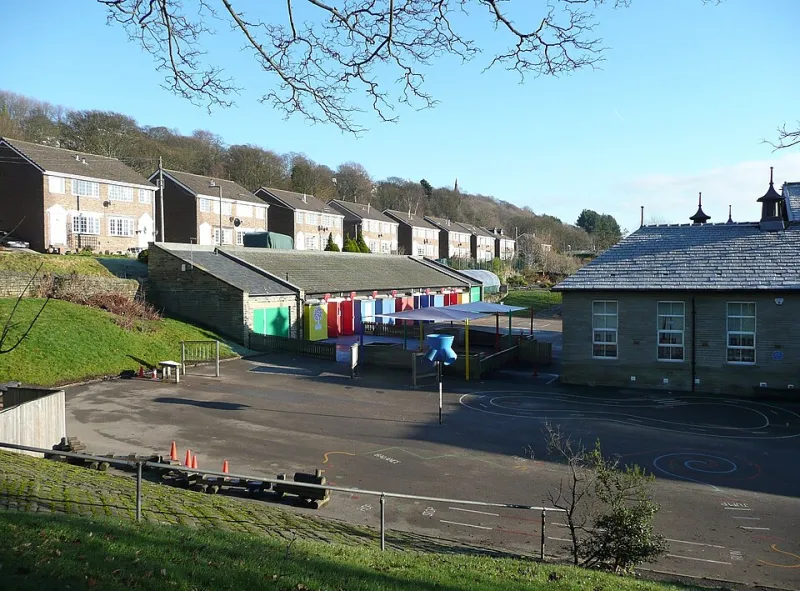
Photo: Humphrey Bolton , CC BY-SA 2.0, via Wikimedia Commons
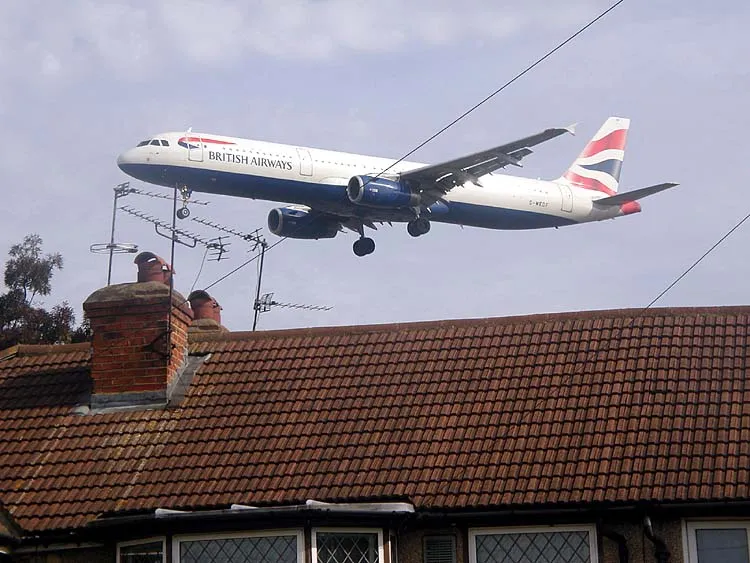
For a child at a primary school in Hounslow, the school day is punctuated by sound. A plane passes low overhead; the teacher pauses; the class waits; the lesson resumes. At playtime, children shout to be heard above the roar, and at the school gate parents exchange the same weary look. This is not an unusual morning in west London. It is the everyday geography of growing up beneath one of the world’s busiest flight paths.
As the Heathrow expansion debate returns in 2026, much of the public argument will focus on runways, terminals and economic growth. But the decision will land first in classrooms, playgrounds and school corridors. If expansion is to be judged properly, children’s exposure to aircraft noise and air pollution must be an explicit test — not a footnote in an environmental statement.
A different kind of school run
Schools near Heathrow are not simply affected by occasional aircraft noise. They sit within a wider environmental system: approach paths overhead, arterial roads nearby, and air quality shaped by aviation, freight and the daily traffic of the school run itself. Children are especially vulnerable because their lungs and brains are still developing, and because they spend long, structured periods in the same buildings and outdoor spaces.
The public health evidence is serious. The World Health Organization has identified aircraft noise as a significant environmental health issue, and UK research has linked exposure to aircraft noise with annoyance, sleep disturbance and impaired cognitive performance in children, including effects on reading and memory. Air pollution — including nitrogen dioxide and fine particulate matter from aviation and associated road traffic — is associated with respiratory problems and reduced lung development. These are not remote risks. They are the conditions in which some children arrive at school, learn and play.
What teachers and parents describe
In conversations with school communities across the Heathrow fringe, the same themes recur. Teachers describe having to stop mid-sentence when a plane passes, and parents describe homework interrupted, bedtime routines disrupted and children who are more tired or irritable after a bad night of aircraft noise. Playgrounds are often the least protected spaces: open, exposed and difficult to shield from sound.
These experiences matter because they are rarely captured by noise contour maps alone. A contour line may show that an area is affected; it does not show what it feels like to teach a phonics lesson beneath a descending aircraft, or what happens to a child with asthma on a hot day when the air feels heavy. School communities hold evidence that planners need, but they are often invited into the process too late, when options have already narrowed.
The gap in the current debate
Expansion assessments tend to treat schools as ‘receptors’ — points on a map to be measured and mitigated. That is not enough. A school is an institution with a timetable, a catchment, a safeguarding duty and a public health responsibility. Its exposure is cumulative: aircraft noise outside, road traffic at the gate, air pollution in the playground, and the stress carried by families at home.
A proper schools test would ask whether expansion can be justified when children’s learning, sleep and health are placed at the centre of the analysis. It would require school-level data, not regional averages. It would consider respite periods, night flights, indoor and outdoor noise, air quality at the school gate, and the cumulative burden on communities already living with aviation noise.
Questions school leaders and PTAs should ask
School communities have a legitimate role in scrutinising any expansion plan. Governors, headteachers and parent-teacher associations can put these questions to councils, Heathrow and planning inspectors:
- Which local schools fall beneath proposed flight paths, and what noise levels are predicted inside classrooms and in playgrounds at different times of day?
- Will there be a funded, school-specific noise insulation and ventilation programme, covering all affected schools rather than only those inside the highest contour?
- How will air quality be monitored at school gates and in playgrounds before and after any change, and what happens if legal limits or health guidelines are breached?
- What respite will children and teachers receive from aircraft noise during the school day, and how will night flights affect sleep and attendance?
- Will expansion increase traffic on the school run, and what safe walking and cycling routes will be provided?
- How will children, parents and school staff be consulted directly, rather than represented only by airport or council communications?
- What cumulative impact assessment has been done for schools already exposed to road noise and poor air quality?
- If mitigations fail, what is the fallback — and who is accountable?
Why children deserve an explicit test
The burden of proof should sit with expansion, not with children. It is not enough to say that aircraft noise can be insulated or that air quality will be monitored. The relevant question is whether the overall effect on a child’s day — their sleep, their concentration, their play, their health — is acceptable. That is a moral question as much as a technical one.
A pause is not obstruction. It is due diligence. In 2026, as the case for a third runway is pressed again, school communities should insist that children are not treated as a residual issue to be managed after the decision has been made. The playground is where the argument becomes real. It deserves a proper answer.
Heathrow Pause will continue to support parents, teachers and governors who want to ask those questions. Protect local communities means protecting the places where children learn, play and grow.