The Uneven Air: Heathrow, Deprivation and the Health Bill That Follows the Flight Path
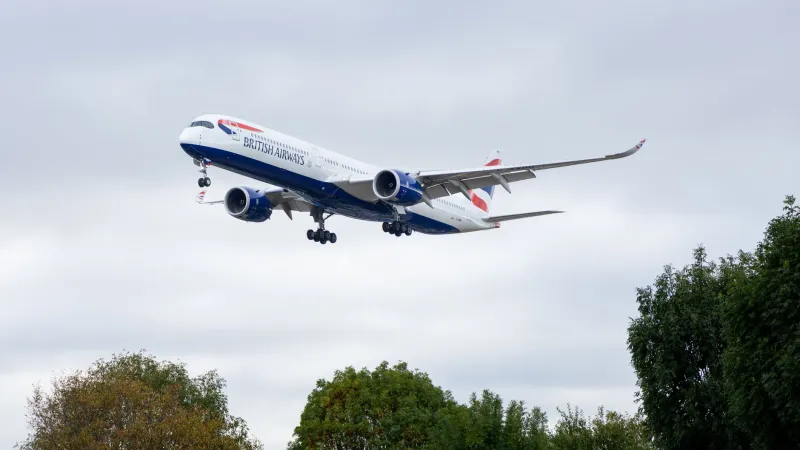
In the argument over Heathrow expansion, air pollution is often presented as a single number: a regional average, a legal limit, a modelled forecast. But pollution is not experienced as an average. It settles on streets, in playgrounds and in the lungs of people who may have the least capacity to move away. As the airport’s future returns to the top of the political agenda in 2026, the most important map is not the runway layout. It is the overlay of dirty air, deprivation and public services.
Layers on a Map, Lives on a Street
Start with monitoring. Heathrow’s own network, together with local authority diffusion tubes in Hounslow, Hillingdon, Slough and Spelthorne, records nitrogen dioxide and fine particulate matter across the corridor west of London. Then add the 2021 Census and the Index of Multiple Deprivation. The pattern is not a simple gradient of wealth fading with distance from the airport. Some wards closest to the perimeter have high levels of fuel poverty, overcrowded housing and residents working shifts. These are the same streets where a car is not a lifestyle choice but a necessity, and where opening a window is not a reliable way to avoid traffic fumes.
What the Monitors and the Census Say Together
Take nitrogen dioxide, the gas most closely associated with vehicle engines and aircraft movements. Over the past decade, legal limits have been breached at times around the airport and on approach roads. The 2026 expansion case leans heavily on future fleet efficiency and sustainable aviation fuel. Both may reduce emissions per flight. Neither removes the extra take-offs, landings and surface journeys that a third runway would bring. The question is cumulative: what happens when new movements are added to a road network already carrying airport staff, freight and passengers?
Particulate matter tells a similar story. PM2.5 is small enough to pass into the bloodstream and is linked to asthma, heart disease and dementia. Heathrow’s monitoring has historically recorded elevated concentrations in the areas closest to the airport. New modelling for 2026 must be ward-level and publicly reproducible, not a single airport-boundary figure.
The Compounding Question
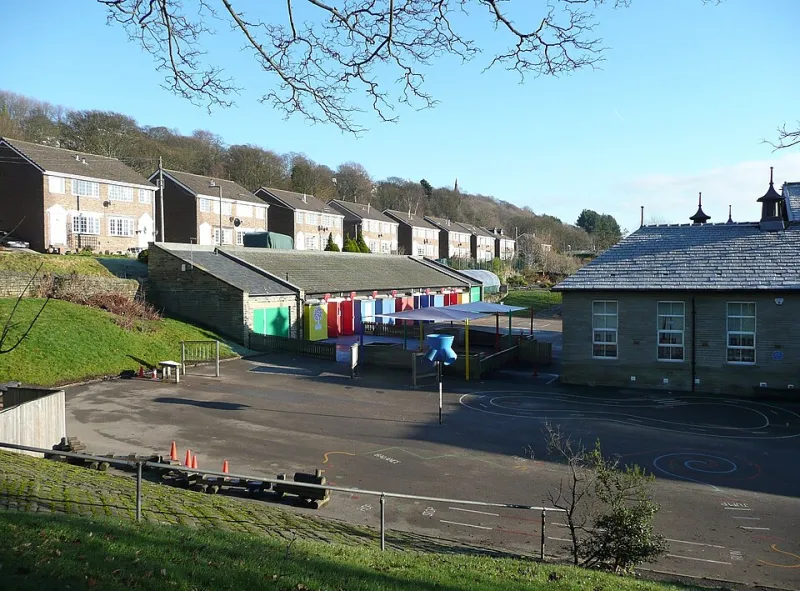
Environmental inequality is not only about who breathes the dirtiest air. It is about who can adapt. A household with savings can double-glaze, move, or buy an air purifier. A family in temporary accommodation cannot. A child at a school under the flight path cannot choose a different playground. A care worker on a zero-hours contract cannot change their commute. When a third runway is added to that landscape, the burden does not fall evenly. It falls on people already carrying the heaviest load.
This is why the phrase “postcode penalty” is useful, but not because it is catchy. It describes a real distributional choice. Planning law requires an environmental impact assessment. It does not automatically require an environmental justice assessment. In 2026, residents can demand that distinction.
Public-Health Questions for Councils and Planners
Here are questions that can be put, in writing, to local authorities, the Planning Inspectorate and Heathrow’s promoters:
- Will air quality modelling be published at ward and school level, with baseline years and predicted concentrations for NO2 and PM2.5?
- How will the assessment separate airport emissions from surface traffic, construction and freight, and then add them together?
- What monitoring will be in place before, during and after construction, and will the raw data be public in real time?
- How are existing health inequalities weighted in the assessment, particularly for children, older people and those with respiratory conditions?
- Which schools, GP surgeries and care homes fall within predicted exceedance areas, and what mitigation is proposed for each?
- What trigger would cause a pause if monitored pollution exceeds the modelled scenario?
A Pause for Evidence, Not a Pause for Ever
Heathrow Pause does not argue that no one should ever fly. We argue that a decision of this scale should not be taken on averages that hide the streets underneath. The communities around Heathrow have already hosted the airport’s noise, traffic and pollution for decades. Before they are asked to host more, they deserve a full account of what is already in the air and who is breathing it. That is not obstruction. It is the minimum standard for a planning decision that will shape public health for a generation.