Weighing the Hold: The Cargo Case for Heathrow Expansion Needs a Manifest Check
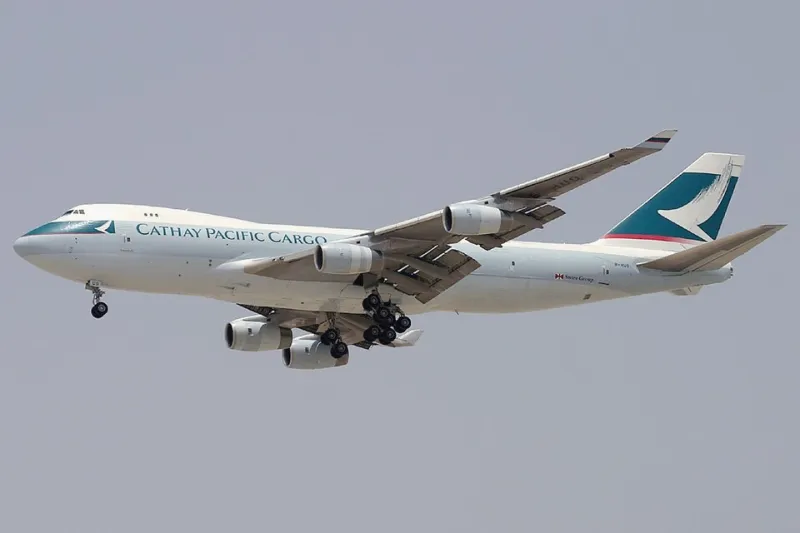
Photo: Konstantin von Wedelstaedt, GFDL 1.2, via Wikimedia Commons
Cargo is the quiet workhorse of the Heathrow expansion case. It appears in consultation documents, trade press and council reports as a simple promise: more runway means more freight, more exports and more global Britain. But freight is not a single commodity, and the evidence behind that promise deserves a manifest check. For communities beneath the flight path, the question is not whether trade matters. It is whether a third runway is the right instrument for the freight we actually handle, and who bears the cost when the forecast does not land.
What the cargo claim actually says
Expansion advocates rarely argue that Heathrow should become a dedicated freight hub. Instead, cargo is folded into a wider story about connectivity, exports and the UK's place in global supply chains. The language is often aggregate: total tonnage, total trade value, total economic benefit. That aggregate hides a crucial distinction between dedicated freighter aircraft and the belly holds of passenger planes. Heathrow is overwhelmingly a passenger airport, and most of its freight travels in the holds of scheduled passenger services. That is not a detail. It is the hinge on which the entire cargo case turns.
If freight is mainly belly-hold, then cargo capacity is a by-product of passenger capacity. A new runway justified by cargo is therefore justified by passenger demand, because without the passenger aircraft there is no hold. The argument becomes circular unless proponents can show a separate, robust market for dedicated freighters. Residents should ask for that separation in plain terms: how many tonnes are forecast to move in bellies, and how many in dedicated freight aircraft? If the answer is mostly bellies, the cargo case is lighter than it looks.
The belly-hold problem
Belly-hold freight is real and valuable. It carries high-value pharmaceuticals, electronics, perishables and urgent spare parts. It supports just-in-time supply chains and e-commerce. But belly capacity has limits. It cannot easily carry outsize machinery, certain dangerous goods or the bulkiest cargo. It depends on passenger routes and frequencies, not on freight demand alone. When passenger demand falls, belly capacity falls with it. A runway sold on cargo growth must therefore explain why passenger growth will be strong enough to create the holds, and why dedicated freighters will not simply use existing capacity at other airports.
There is also a measurement problem. Freight forecasts often quote tonnage, but trade policy is usually concerned with value. A tonne of semiconductors and a tonne of low-value bulk goods are not equivalent in trade terms. If Heathrow's cargo case rests on high-value, low-weight goods, the tonnage numbers may look impressive while the trade benefit is concentrated in a narrow slice of the economy. If it rests on bulky goods, those goods may be better served by dedicated freight airports with road and rail links designed for them. Either way, residents deserve to know which cargo the forecast is actually describing.
Forecasts and the missing audit trail
Public forecasts are rarely presented with a full audit trail. Residents are told that cargo will grow, but not which scenario was used, which years were modelled, or how assumptions about e-commerce, nearshoring and digital trade were handled. Some forecasts predate recent shifts in global supply chains; others are revised versions of older models. The range matters. A forecast that is presented as a single line on a chart should be published as a range, with the assumptions behind each end.
The most important assumption is often the least visible: whether new capacity creates trade or diverts it. Additional Heathrow freight capacity may attract cargo that would otherwise move through East Midlands, Manchester, Stansted or continental hubs. That is not necessarily a national loss, but it is not a national gain either. If the trade benefit is largely diversion, the local cost is being asked to pay for a redistribution of activity rather than a net increase in UK trade. The burden of proof should sit with those making the claim.
Regional airports and digital trade
Regional airports have their own freight ambitions. East Midlands and Manchester have long-standing cargo operations and surface access plans. Stansted serves dedicated freighter traffic. A serious cargo case must explain why those airports cannot absorb the growth, or why Heathrow is uniquely placed to do so. In a country with regional inequality high on the political agenda, a case that concentrates additional freight capacity in the South East needs a stronger regional argument than a general appeal to exports.
Digital trade is changing the picture, though not erasing it. Software, media and professional services cross borders without a cargo hold. Documents that once travelled as freight now travel as data. That does not mean physical trade disappears, but it does mean forecasts built on older assumptions about paper, print and routine business correspondence may overstate demand. E-commerce has partly offset this by generating small parcels and returns, much of which moves in belly holds and integrator networks. The net effect is uncertain, which is exactly why the forecast should be transparent rather than asserted.
The local ledger
Freight is not an abstraction for communities around Heathrow. It means vans, lorries, warehouses and night movements. It means surface access pressure on roads already carrying commuter and airport traffic. It means air quality and noise, including the low rumble of freighters and the early-morning departure of belly-hold services. If cargo growth is used to justify a third runway, the local environmental ledger must include freight traffic, not just passenger numbers. Night flight restrictions, road congestion and warehouse sprawl are part of the cargo case, whether or not they appear in the headline forecast.
Heathrow Pause does not oppose trade. We oppose the use of an unexamined cargo claim to lock in permanent infrastructure before the demand is understood. A pause is not a rejection of freight. It is a demand for a proper manifest: what is being carried, by which aircraft, for whose benefit, and at what local cost.
Questions residents can ask
- What share of forecast cargo is belly-hold and what share is dedicated freighter?
- Which forecast scenario is being used, and what are the low and high assumptions?
- Is the benefit measured in tonnage or trade value, and which sectors does it assume?
- How much of the growth is new trade and how much is diversion from other UK airports?
- What assumptions are made about digital trade, e-commerce and nearshoring?
- What surface access and night movement impacts are included in the freight model?
- What happens if cargo forecasts are not met after construction?
- Who independently audits the forecast before planning consent is granted?
These are not technical objections for specialists. They are the basic questions any public interest test should answer. If the cargo case for a third runway cannot survive them, it should not be used to hurry a decision. Pause. Rethink. Protect local communities.